Call: +27834270994
 Send Inquiry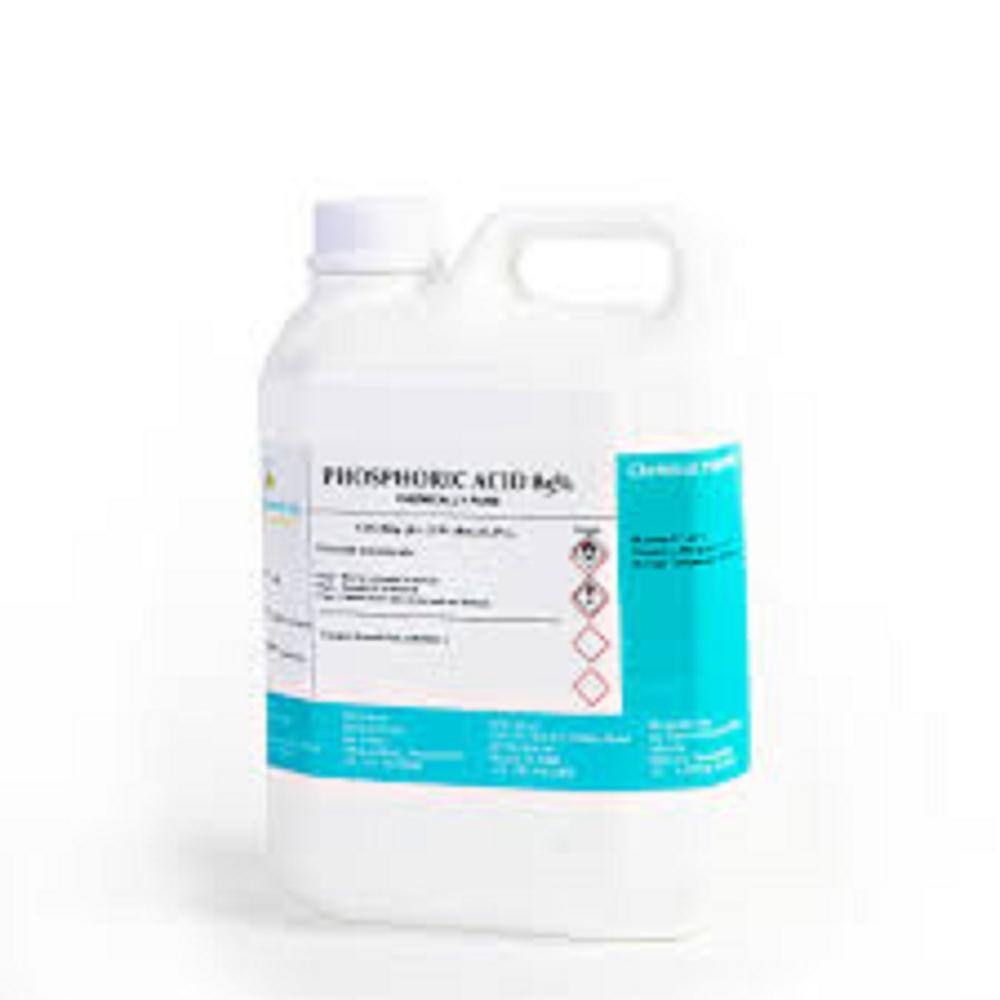
Phosphoric acid (85%
40.0 USD ($)/Metric Ton
Product Details:
- Boiling point 158C (decomposes above 213C)
- Refractive Rate n20/D 1.433
- Molecular Formula H3PO4
- Taste Sour (when sufficiently diluted)
- HS Code 28092010
- Molecular Weight 98.00 g/mol
- Smell Odorless
- Click to View more
X
Phosphoric acid (85% Price And Quantity
- 40.0 USD ($)/Metric Ton
- 50 Metric Ton
Phosphoric acid (85% Product Specifications
- Used in food industry (acidulant), fertilizer, detergents, dentistry, water treatment, rust removal, laboratory reagent
- 7664-38-2
- Miscible with water
- 28092010
- Phosphoric Acid
- 1.685 Gram per cubic centimeter(g/cm3)
- Phosphate rock (processed via wet or thermal process)
- Inorganic Acid
- Industrial, food additive, laboratory, metal treatment
- 98.00 g/mol
- Orthophosphoric acid
- Technical/Industrial/Food Grade
- 158C (decomposes above 213C)
- 21C
- Colorless, transparent, syrupy liquid
- n20/D 1.433
- 231-633-2
- H3PO4
- 85%
- Odorless
- Sour (when sufficiently diluted)
- Stable under normal conditions, incompatible with bases and strong oxidizers
- Non-flammable
- Corrosive to metals and tissue
- 3 Years (if stored properly)
- HDPE containers, carboys, drums
- 1805
- <0.03 kPa (20C)
- Store in tightly closed container, in a cool, dry, well-ventilated area
- 8 (Corrosive)
- ~1.5
Phosphoric acid (85% Trade Information
- South Africa
- Days after Acceptance (DA), Paypal, Delivery Point (DP)
- 50 Metric Ton Per Week
- 50 Week
Product Description
Our Phosphoric Acid 85% is a high-purity, multi-purpose acid widely used in food processing, beverage production, industrial applications, and water treatment. This clear, odorless, and highly concentrated solution offers consistent quality and dependable performance across a wide range of industries.
In the food and beverage sector, Phosphoric Acid (85%) is commonly used to adjust pH levels, enhance flavor, and act as a preservative, especially in carbonated drinks. In industrial applications, it's valued for its effectiveness in metal treatment, rust removal, and cleaning formulations. It is also extensively used in fertilizer manufacturing, detergents, and industrial water treatment systems.
Our product meets stringent quality and safety standards, ensuring optimal results whether used in commercial food processing or technical-grade chemical operations. Available in various bulk packaging options, its ideal for both small-scale users and large-scale manufacturing.
Superior Stability and Safety
Our phosphoric acid (85%) displays exceptional stability under normal storage conditions and is classified as non-flammable. Delivered in robust HDPE packaging, it guarantees both safety during storage and transport. Its long shelf life supports optimal stock management for diverse industries.
Wide Range of Applications
This product serves crucial functions in food processing as an acidulant, as well as in producing fertilizers, detergents, dental products, and water treatment chemicals. Its utility also extends to laboratories, rust removal, and metal surface treatments, highlighting its adaptability and value across multiple sectors.
Handling and Storage Guidelines
To maintain product integrity, store phosphoric acid in a tightly closed, HDPE container in a cool, dry, and well-ventilated area. Ensure all local regulations regarding the storage of corrosive substances are followed. Avoid storing near bases and strong oxidizers to prevent reactions and preserve material quality.
FAQ's of Phosphoric acid (85%:
Q: How should phosphoric acid (85%) be stored for maximum stability?
A: Phosphoric acid (85%) should be stored in tightly closed HDPE containers, in a cool, dry, and well-ventilated location. Avoid contact with bases and strong oxidizers to maintain its stability and prevent hazardous reactions.Q: What are the main industrial and commercial applications of phosphoric acid (85%)?
A: Phosphoric acid (85%) is extensively used as an acidulant in the food industry, for fertilizer production, in detergents, dentistry products, water treatment chemicals, rust removal processes, as a laboratory reagent, and for metal surface treatments.Q: When is it recommended to use food grade versus technical grade phosphoric acid?
A: Food grade phosphoric acid should be used for applications involving food and beverages where purity standards are required, while technical or industrial grades are suitable for non-food uses such as metal treatment, detergents, and agricultural applications.Q: Where can phosphoric acid (85%) be sourced and what packaging options are available?
A: Phosphoric acid (85%) is available from reputable dealers, exporters, manufacturers, and suppliers, typically packaged in HDPE containers, carboys, or drums to ensure safety and ease of handling during transport and storage.Q: What is the production process for phosphoric acid (85%)?
A: Phosphoric acid (85%) is produced from phosphate rock using either a wet or thermal process. The choice of process influences purity and is selected based on the intended application and industry requirements.Q: How is phosphoric acid (85%) used beneficially in water treatment and rust removal?
A: In water treatment, phosphoric acid helps adjust pH and prevent scaling, ensuring optimal water quality. For rust removal, it reacts with iron oxide to form soluble phosphates, effectively eliminating rust from metal surfaces.Q: What are the safety precautions for handling phosphoric acid (85%)?
A: Due to its corrosive nature, always wear suitable protective equipment such as gloves, goggles, and protective clothing. Avoid inhaling vapors and prevent contact with skin or eyes. Handle only in well-ventilated areas, and follow all local regulatory guidelines for corrosive substances.Tell us about your requirement

Price:
Quantity
Select Unit
- 50
- 100
- 200
- 250
- 500
- 1000+
Additional detail
Mobile number
Email

Other Products in 'Feed Preservation Acid' category


Contact Details
PAGE GLOBAL EXPORT (PTY) LTD.
- 1, Charles Street, Bloemfontein - 9301, Free State, South Africa
- Phone :+27--834270994

 Send Inquiry
Developed and Managed by Infocom Network Private Limited.
